
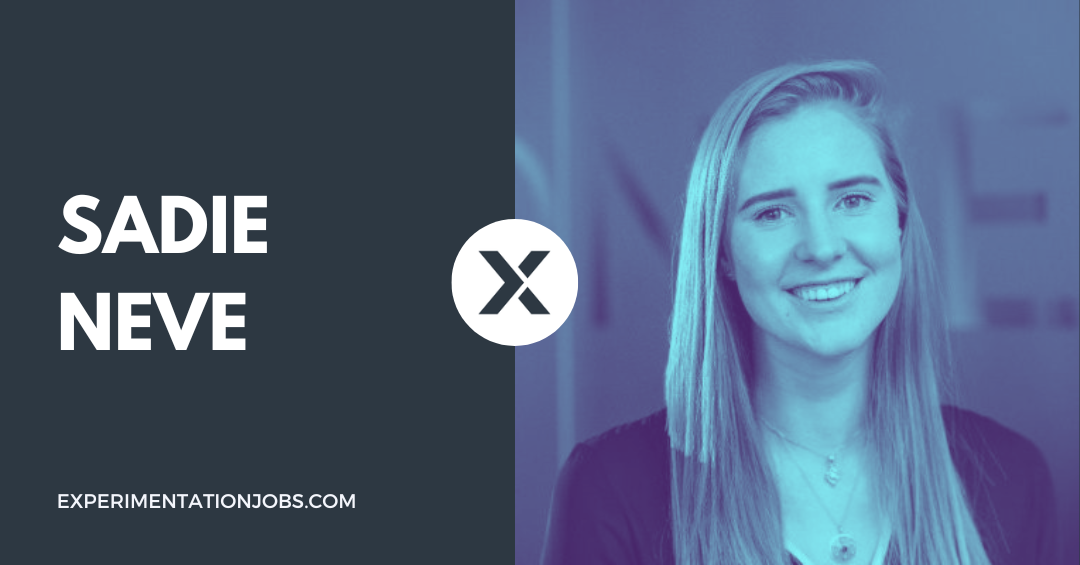
The goal of this interview series is to inspire and help people to transition their career into a new or next experimentation related role. In this edition, Sadie Neve shares her journey. She is the Group Digital Experimentation Manager at Rubix, Europe’s leading distributor of industrial maintenance, repair, and MRO products and services.
As for what won’t change in the next ten years. The scientific method! It’s simple but true: experimentation is rooted in this process and that foundation is timeless. No matter how the tools evolve, the principle of testing, learning, and iterating will always remain at the heart of what we do.
Sadie Neve
Please introduce yourself to the readers
Hi, I’m Sadie – a born and bred Londoner with a big love for exploring the world (57 countries and counting!), staying active through fitness challenges, and discovering new restaurants whenever I can!
When I’m not doing all the above, I’m busy experimenting with 10 years’ experience under my belt! My journey has spanned different agencies, which means I’ve had the chance to work across a wide variety of industries. Some of those I’m really proud of, like charities, and others a little more questionable, like gambling and tobacco. But each experience has taught me something valuable and shaped the way I approach experimentation today.
What is your current experimentation role and what do you do?
I’m the Group Digital Experimentation Manager at Europe’s leading distributor of industrial maintenance, repair, and MRO products and services. Operating at a group level across 22 markets, my role is to build our experimentation programme from the ground up. That means creating the processes, tools, and mindset that help our product and marketing teams make evidence-driven decisions to continuously improve our digital experience for customers.
Because experimentation is still new here, a big part of my job is embedding a culture of curiosity – showing colleagues that testing ideas isn’t about just validating and measuring, but about learning what truly works. It’s a challenge, but also a huge opportunity, and I’m excited to see how far this programme can grow across all our markets!
How did you enter the experimentation space? What was your first experimentation related role?
I truly tripped, stumbled and fell into this industry – quite literally by accident! After completing my degree in Psychology and a Master’s in Sports and Exercise Psychology, I realised the part I loved most was the experimentation and statistics side of things. So I did what any curious graduate would do; google simple phrases like ‘experimentation in real life’ and ‘experimentation in digital’.
This search led me to an Associated Consultant role at Conversion.com, and that’s where the real journey began. The training and mentorship I received there gave me the foundations I needed, and it quickly became clear that not only did I enjoy the work, but I wasn’t too shabby at it! Looking back, it feels like the perfect blend of my academic background and my natural curiosity, and it set me up for everything I’ve done since!
How did you start to learn experimentation?
My degrees were heavily rooted in experimentation and understanding how our brains work, so I already had a strong foundation. My first role gave me the training and tools to apply that knowledge in a digital environment, but I’ve always believed that success in this space, in any job, comes down to self-learning.
I’m an avid reader and make sure to mix books directly and indirectly related to experimentation, alongside blogs and even LinkedIn posts – there’s so much you can learn from other practitioners sharing their experiences. To keep track of it all, I use a personal Miro space where I store and update insights and it’s become a great go-to reference library for me!
How do you apply experimentation in your personal life? (what are you tinkering with or always optimizing?)
Experimentation finds its way into my personal life through sport and fitness. I play netball competitively, have run marathons, and most recently completed my first Hyrox solo – so I’m always looking for ways to optimise my performance.
I’m a big believer that data is power, which is why I invested in an Oura ring. It helps me track sleep, stress, and recovery, so I use those insights to test small changes to my routine! For me, it’s the same mindset I take into my job; try something new, measure the impact, and keep iterating – whether it’s a workout or a webshop!
What are you currently doing to keep up with the ever-changing industry?
Conferences are a big part of this for me. I really enjoy hearing what other companies and agencies are experimenting with, and being part of those conversations makes me feel inspired and connected. These talks often spark my own investigations, helping me dig deeper into the practical side of new ideas.
I’ve also recently joined the Women in Experimentation Slack community, which has been a fantastic source of inspiration. It’s full of brilliant practitioners so even just observing the discussions gives me fresh perspectives that I can take back into my own work!
What recommendations would you give to someone who is looking to join the experimentation industry and get their first full-time position?
Immerse yourself in the industry and don’t be afraid to connect with people. I used to be nervous about reaching out, but saying hi, asking questions, and joining conversations is honestly one of the best ways to get ahead. The experimentation community is full of people who are generous with their knowledge, and you’ll be surprised how much you can pick up just by engaging.
Starting out at an agency made all the difference. Being surrounded by experts, learning from their approaches, and having the support to grow and develop gave me a solid foundation. Agencies expose you to a wide variety of industries and challenges, which is a fantastic way to build skills quickly!
Which developments in experimentation excite you? How do you see the field changing in the next 5 to 10 years?
When I first started, experimentation was very much siloed within marketing teams. What has excited me over the last few years is experimentation being embraced more widely across businesses – from product development to even offline environments like physical stores. I hope we continue to expand into these areas and unlock more value!
I’m also really excited about how AI will help us with the ability to surface customer trends and uncover opportunities that might otherwise have been missed. I’ve always felt that the discovery part of the process doesn’t get the respect it deserves, so it’s great to see technology helping us elevate insight generation.
As for what won’t change in the next ten years – the scientific method! It’s simple but true: experimentation is rooted in this process and that foundation is timeless. No matter how the tools evolve, the principle of testing, learning, and iterating will always remain at the heart of what we do.
Is there anything people reading this can help you with? Or any parting words?
Calling all B2B practitioners!! Most of my career has been in B2C, and while I don’t think the industries are worlds apart, I’m really keen to learn more about the nuances of B2B experimentation. Hearing your experiences, challenges, and successes would be hugely valuable in helping me broaden my perspective.
Which other experimenters would you love to read an interview by?
I don’t have specific names in mind, but I’d love to hear from research and UX practitioners. Their perspective on the discovery phase is so valuable, and I think it would be fascinating to understand how they view experimentation through their own lens. Seeing how they connect user insights with testing could really broaden the conversation and highlight different ways experimentation adds value.
Thank you Sadie for sharing your journey and insights.

